Fianna Fáil Election Posters, 1948

Fianna Fail skipper

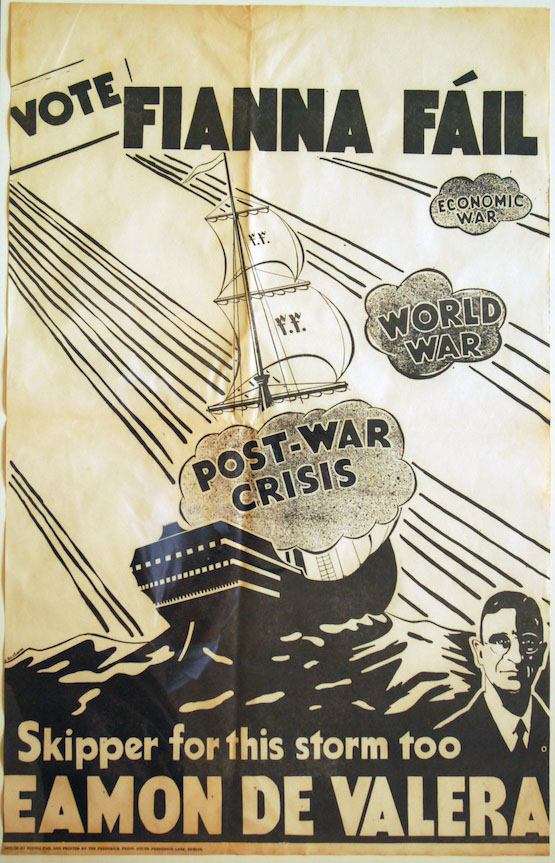
Fianna Fáil had a tangled birth in the Civil War and first took power in 1932

Sinn Féin split into pro-and Anti-Treaty factions, with de Valera leading the Anti-Treaty faction. Anti-treaty Sinn Féin boycotted the Dáil for several years after the end of the Civil War until a faction around Éamon de Valera split and created Fianna Fáil. They first came to power in 1932 and were long the most popular party in Ireland.

The 1948 election was controversial as Éamon de Valera introduced the Electoral Amendment Act, which was seen as an attempt to ensure the continued dominance of Fianna Fáil. But de Valera failed to retain power after the other parties joined together to create the first coalition government.

Permanent Collection
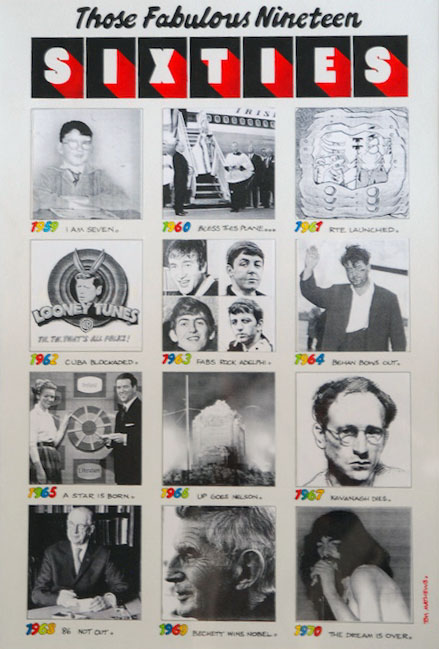
These Fabulous Nineteen Sixties by Tom Mathews

Fabulous Nineteen Sixties

Ten of Ireland’s most accomplished artists have each produced a piece that reflects on some aspect of life in Dublin during the 20th Century

A Dublin institution, cartoonist Tom Mathews relives the sixties, with a witty, comic-strip approach to some of the decade’s highlights, including the visit of President John F. Kennedy, the deaths of Brendan Behan and Patrick Kavanagh, the blowing up of Nelson’s Pillar and The Beatles live at the Adelphi cinema.

Tom incorporates images of himself to bookend this dynamic decade, appearing as a boy at one end, and with a classic late sixties look at the other.

With thanks to Tom Mathews

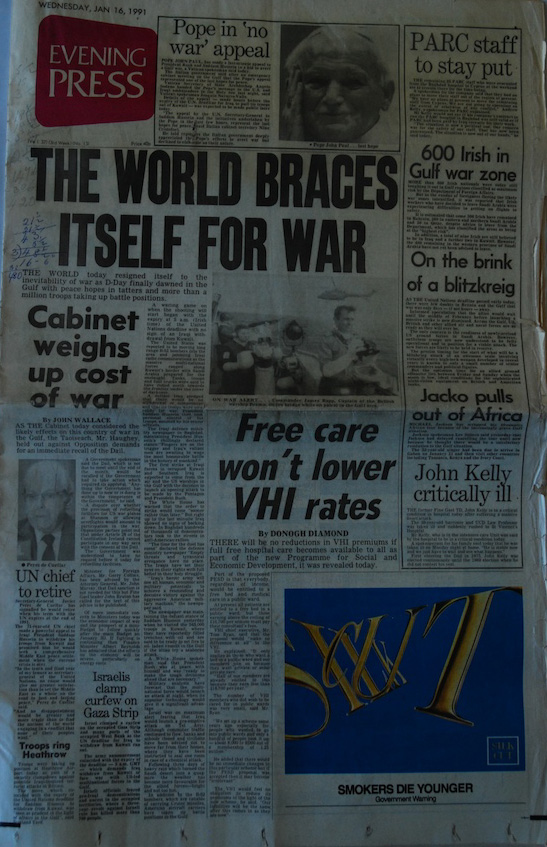
Evening Press, 1991

Evening press

The Evening Press was a very popular Dublin newspaper

The Evening Press was the most popular evening newspaper in Ireland from 1954 to the mid-1990s, with sales at one point of 175,000 copies a day. It published nearly 10,000 cartoons by ‘Till’ (George O’Callaghan), the most prolific cartoonist in the world, and the early work of journalists Con Houlihan and Vincent Browne.

With thanks to Winter Hynes

John Bull and Hibernia, 1912

Entente cordiale

Cartoon commenting on Anglo-Irish relations in 1912

This cartoon by John Fergus O’Hea shows John Bull (Britain) and Hibernia (Ireland) shaking hands in front of the burning fire of an Entente Cordiale. O’Hea, who worked under the pseudonym Spex, was one of the most prolific Irish political cartoonists of his time. The cartoon suggests that love is in the air, although Hibernia seems a little unsure.

Permanent Collection

Hilton Edwards and Micheál Mac Liammóir in St. Stephen’s Green, 1975

Edwards and MacLiammóir

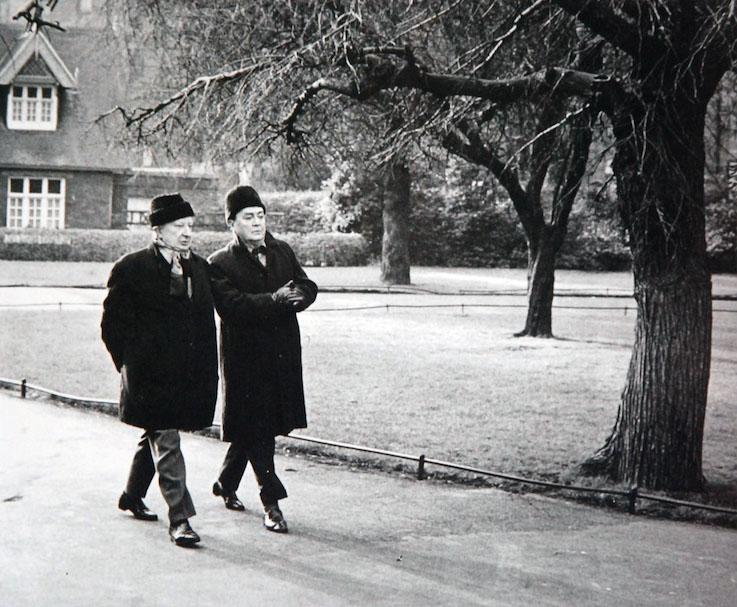
Edwards and Mac Liammóir walking through St Stephen’s Green 

Hilton Edwards and Micheál MacLiammóir were partners in both a romantic and a business sense. They opened the Gate Theatre together in 1928. Both were born in England.

In the Gate they presented European plays in contrast to the Irish peasant fare at the Abbey. (The two theatres were written off as Sodom and Begorrah.) The photograph is by Bill Doyle, ‘Ireland’s Cartier-Bresson.’

With thanks to Leslie Doyle for Bill Doyle and Lilliput Press

A documentary about Orson Welles’ time at the Gate Theatre:


Éamon de Valera with Dr. Alan Thompson and Dr. Bethal Solomons, 1947

Eamonn de Valera and Bethel Solomons

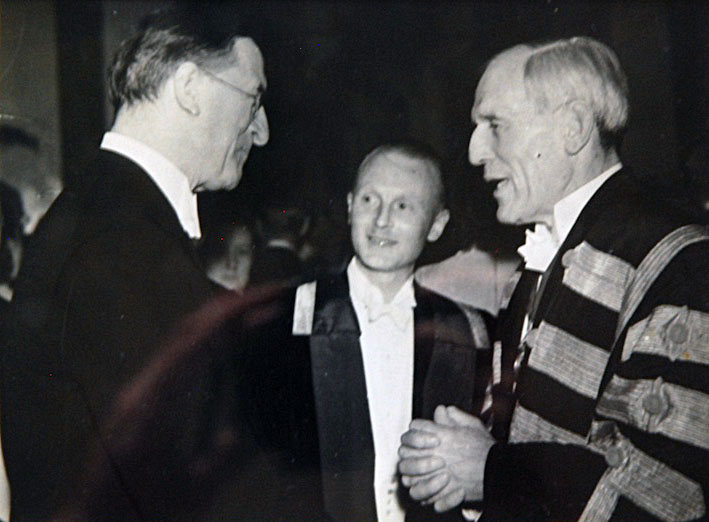
A rare photograph of then-Taoiseach Éamon de Valera smiling

In this photograph, de Valera is being greeted by Dr. Bethal Solomons at the Rotunda Bicentenary Congress.

Dr. Solomons was “a world famous obstetrician and gynaecologist, rugby international, horseman, leader of liberal Jewry and of Irish literary and artistic renaissance.” Master of the Rotunda Hospital, he won ten caps on the Irish rugby team, was the first president of the Liberal Synagogue in Dublin, and was even mentioned in Finnegans Wake.

With thanks to the Rotunda Hospital

Watch a video about Éamon de Valera  and Bethal Solomons:

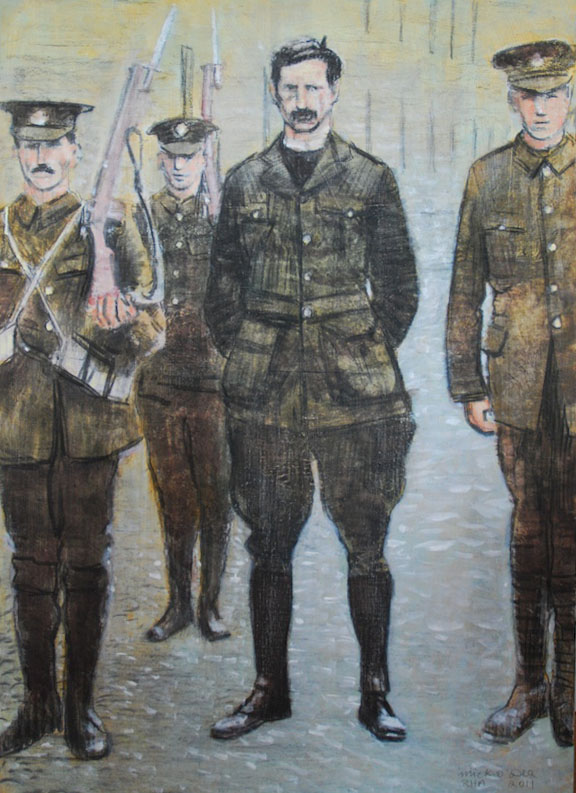
Eamon De Valera by Mick O’Dea, 1916

Eamon de Valera Mick O'Dea

Ten of Ireland’s most accomplished artists have each produced a piece that reflects on some aspect of life in Dublin during the 20th Century

Mick O’Dea RHA tackles the second decade, a seismic period in Irish life, where rebellion was followed by a War of Independence. Making compelling work in his signature style, from the photographs of the day, Mick uses brilliantly economic handling of line and colour to breathe new life into the telling of the tale. Steeped personally in the history of the period, Mick’s painting, Commandant De Valera in Custody, 1916 shows De Valera arrested by two Tommies in the aftermath of the 1916 rising. The future Taoiseach and President of the Republic, spared execution because of his foreign birth, stands tall between his captors. He would cast a long and controversial shadow.

With thanks to Mick O’Dea

Watch the first part of a documentary on De Valera;

‘Éamon de Valera is Dead’, 1975

Eamon de Valera dead

‘Most influential Irish political leader of this century dies peacefully in his 93rd year’

On Saturday 30 August 1975, the Irish Times announced the death of Éamon de Valera. A towering influence, he served multiple terms as a socially conservative Taoiseach and President.

De Valera retired from politics in 1973 at the age of 90, the oldest head of state in the world at the time. He is buried in Glasnevin Cemetery.
Permanent Collection

Watch an RTE announcement about Éamon de Valera’s death:

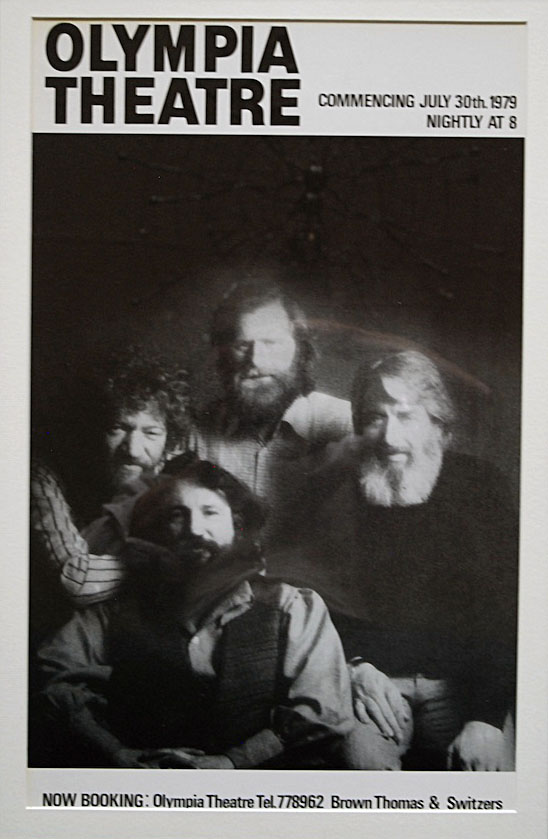
Dubliners Poster, 1979

Dubliners poster

The Dubliners were a world-famous Irish folk music group

The Dubliners were formed in 1962. By 1979, when the the folk band were booked to play a week of gigs in the Olympia, such was their popularity that the concerts sold out instantly, despite the fact that the printer forgot to put the name of the band on the posters.

On loan from Phelim Drew

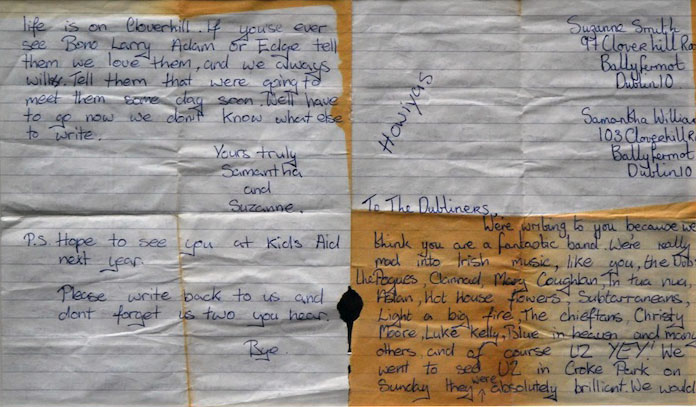
Dubliners Fan Letter, 1980s

Dubliner's fan letter

The Dubliners were a much-loved Irish folk music group

Two young fans of The Dubliners wrote this letter to the band in the 1980s – although they spend most of the letter telling the folk band how much they love U2. Despite tough times in the city, and especially in suburbs like Ballyfermot, these children evoke a colourful sense of community, fun and individualism.

With thanks to Phelim Drew