Scoil Éanna Prospectus, 1910

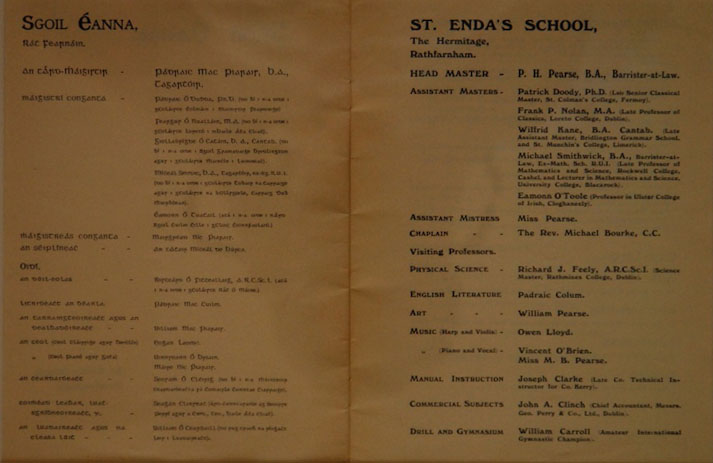
Scoil Éanna

The 1910 prospectus for Patrick Pearse’s Irish-language school Scoil Éanna

This school prospectus encapsulates the two great loves of P.H. Pearse’s life: education and the Irish language. Greatly encouraged by the example of Belgian schools, in 1908 Pearse founded Scoil Éanna in Ranelagh, a bilingual school for boys, followed shortly in 1910 by a girls’ school, Scoil Íde.

As well as teaching through both Irish and English, Pearse pursued and pioneered a child-centred approach to education. His 1912 collection of essays, The Murder Machine, was an indictment of the British education system, placing Pearse at the forefront of educational innovation.

With thanks to Richard Brett

Portrait of Samuel Beckett, 1985

Samuel Beckett

Beckett is one of Ireland’s most acclaimed literary figures

Samuel Beckett grew up in Foxrock, but spent most of his life in Paris, where he is here captured near his home on the Boulevard St. Jacques. Beckett is most famous for his minimalist plays, often laced with dark humour, like Waiting for Godot and Endgame. The man who took this photograph, John Minihan, is an engaging figure who recalls his youth with a puckish twinkle.

Permanent Collection

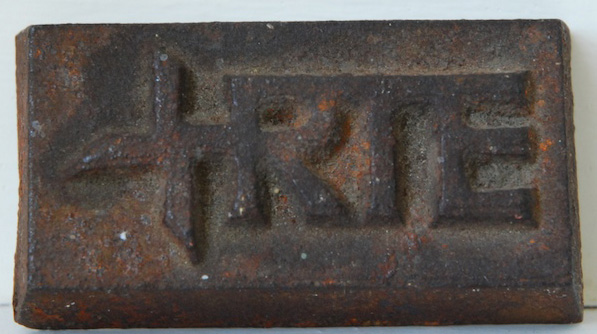
RTÉ Stamp, 1970s

RTE

Radio Teilifis Éireann (RTÉ) is Ireland’s national broadcaster

RTÉ has its origins in 1926, with the creation of 2RN, Ireland’s first radio station. The 1960 Broadcasting act changed its name to Radio Éireann, and made provisions for a new television channel, Telefís Éireann.

The introduction of television in 1961 was a major catalyst for social change in Ireland, with imported British and American TV shows and home-grown content like the Late Late Show providing a platform for discussing taboo subjects like contraception and homosexuality.

Permanent Collection

View an RTÉ test card from the 1970’s:

Republic of Ireland Bond, 1920

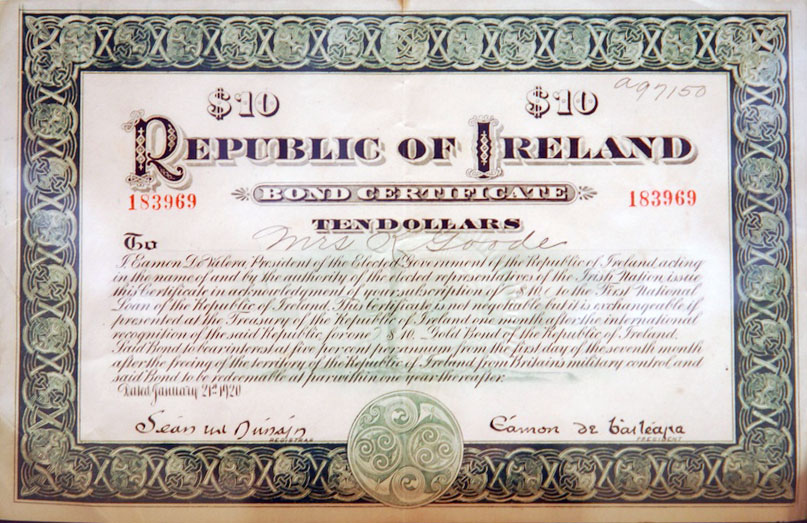
Republic of Ireland bond

Republic of Ireland bond sold by Eamon de Valera

During the year and a half he spent crisscrossing the United States, Éamon de Valera used ‘republican bonds’ as a method of fundraising. Raising close to $6 million, the bonds were powerful tools, legitimising the Irish Republic in the eyes of people at home and abroad. However, after the Civil War the issue of whom the money belonged to would prove contentious. This $10 bond is dated January 21st 1920 and was issued to a Mrs. Goode.

With thanks to Johnnie Fox’s Pub

Watch an RTÉ  Documentary about the Irish Civil War:

RTÉ Radio 2 Badge, 1980s

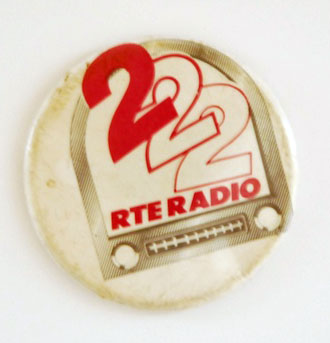
Radio 2 badge

Radio 2 waas the forerunner to today’s 2FM

RTÉ created a second radio station in 1979, to focus more on popular music. Called Radio 2 between 1979 and 1988, the name was later changed to 2FM. The first song broadcast was ‘Like Clockwork’ by the Boomtown Rats.

With thanks to Michael Browne

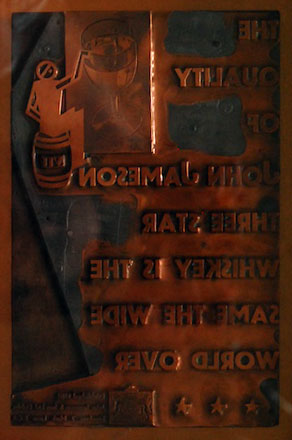
Jameson Ad Printing Plate, 1930s

Quality of JamesonPlate for printing advertisements for Jameson whiskey

Dublin is indefatigably proud of its reputation as a boozy town. Jameson whiskey was first made here in 1780, when a distillery opened on Bow Street. This plate was used for printing advertisements. It assures readers that “The quality of John Jameson Three Star whiskey is the same the wide world over.”

With thanks to the Old Jameson Distillery

Watch this modern look at the Old Jameson Distillery:

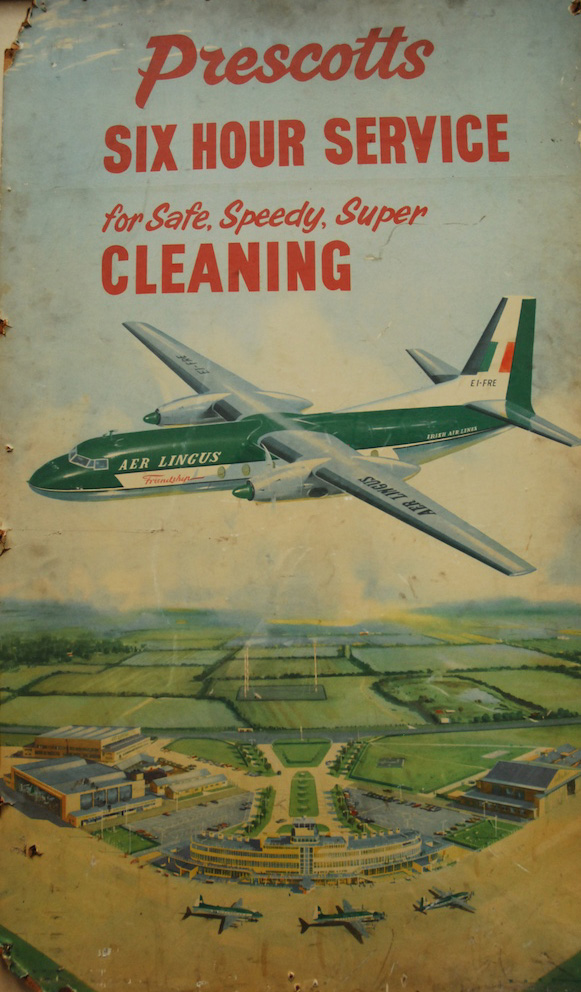
Prescott’s Dry Cleaning Poster, 1964

Prescott's dry cleaners

This poster has nothing to do with air travel

It is an ad for Prescott’s dry cleaners in Drumcondra, near the airport. The pitch borrows the glamour and speed of commercial air travel to make a mundane service seem more exciting.

The plane in the picture – a Fokker Friendship – puts the ad some time between 1958 and 1966, when the Friendships were phased out of service. A miniature incarnation of Dublin airport is depicted at the bottom of the ad. The airport was designed by Desmond Fitzgerald, who was only 26 years old when he secured the commission.

Permanent Collection

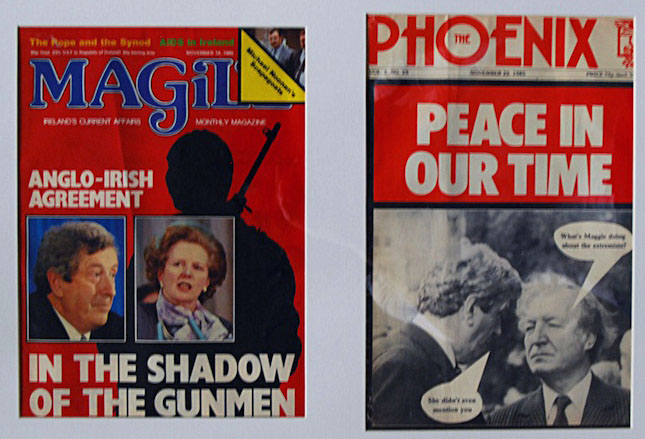
Magazine Covers, 1985

Phoenix

Magazine covers commenting on the Anglo-Irish Agreement of 1985

The Anglo-Irish Agreement was signed by Taoiseach Garret FitzGerald (‘Garret the Good’) and Margaret Thatcher on 15 November 1985, with the intention of creating peace in Northern Ireland. The Provisional IRA and loyalist paramilitaries rejected the agreement and continued fighting. Magill was a left-wing magazine founded by Vincent Browne in 1977.

John Mulcahy’s Phoenix is an Irish Private Eye.

Permanent Collection

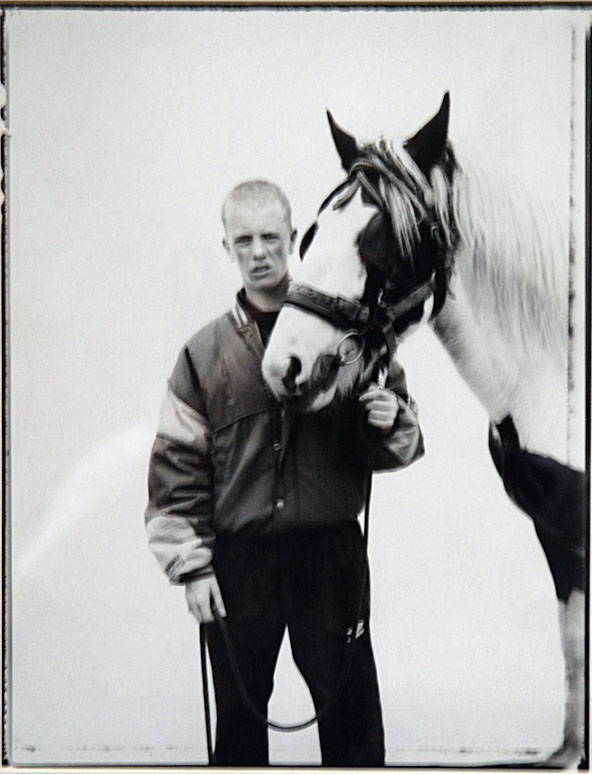
Martin Long with Babyface by Perry Ogden, 1996

Perry Ogden photo

Perry Ogden is an acclaimed English photographer with a studio on Capel Street. His Pony Kids show was an artistic event of note in the mid-1990s

There is a subculture of young working class horse owners in Dublin’s inner city and some of the city’s most deprived suburbs. Horses and ponies are ridden bareback, bought and sold in Smithfield Square on the first Sunday of every month.

Permanent Collection

Watch a video of Perry Ogden:

Paul McGuinness’ Freedom of the City, 2000

Paul McGuinness freedom of the city

Paul McGuinness’ Freedom of the City of Dublin

U2 and their manager, Paul McGuinness, were awarded the Freedom of Dublin in 2000. As part of the award, they each received a Waterford Crystal model of a Joshua Tree – a reference to the band’s seminal 1987 album. The models were so delicate that only Paul’s survived the journey home.

With thanks to Paul McGuinness

Watch an interview with Paul McGuinness: