Stained Glass Window by Harry Clarke, 1920s
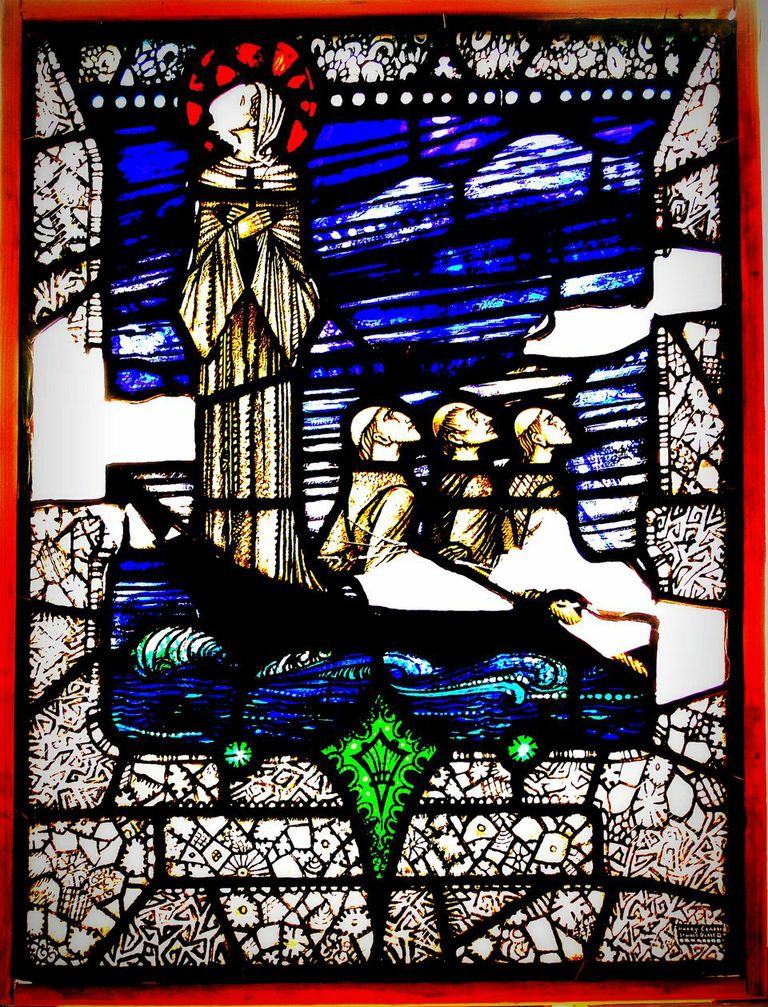
Stained glass window in the style of Irish medieval manuscript illumination

Harry Clarke was Ireland’s pre-eminent stained-glass artist. His religious works are renowned for emulating the spirit of Irish medieval manuscript illumination.

In his secular designs the Dubliner experimented with innovative new techniques, culminating in his masterpiece The eve of St Agnes (1923-24).

Clarke’s work was commissioned throughout Ireland and in Australia and the United States. You can see his stained-glass windows in Bewley’s Café (1927) around the corner from the museum.

Permanent Collection
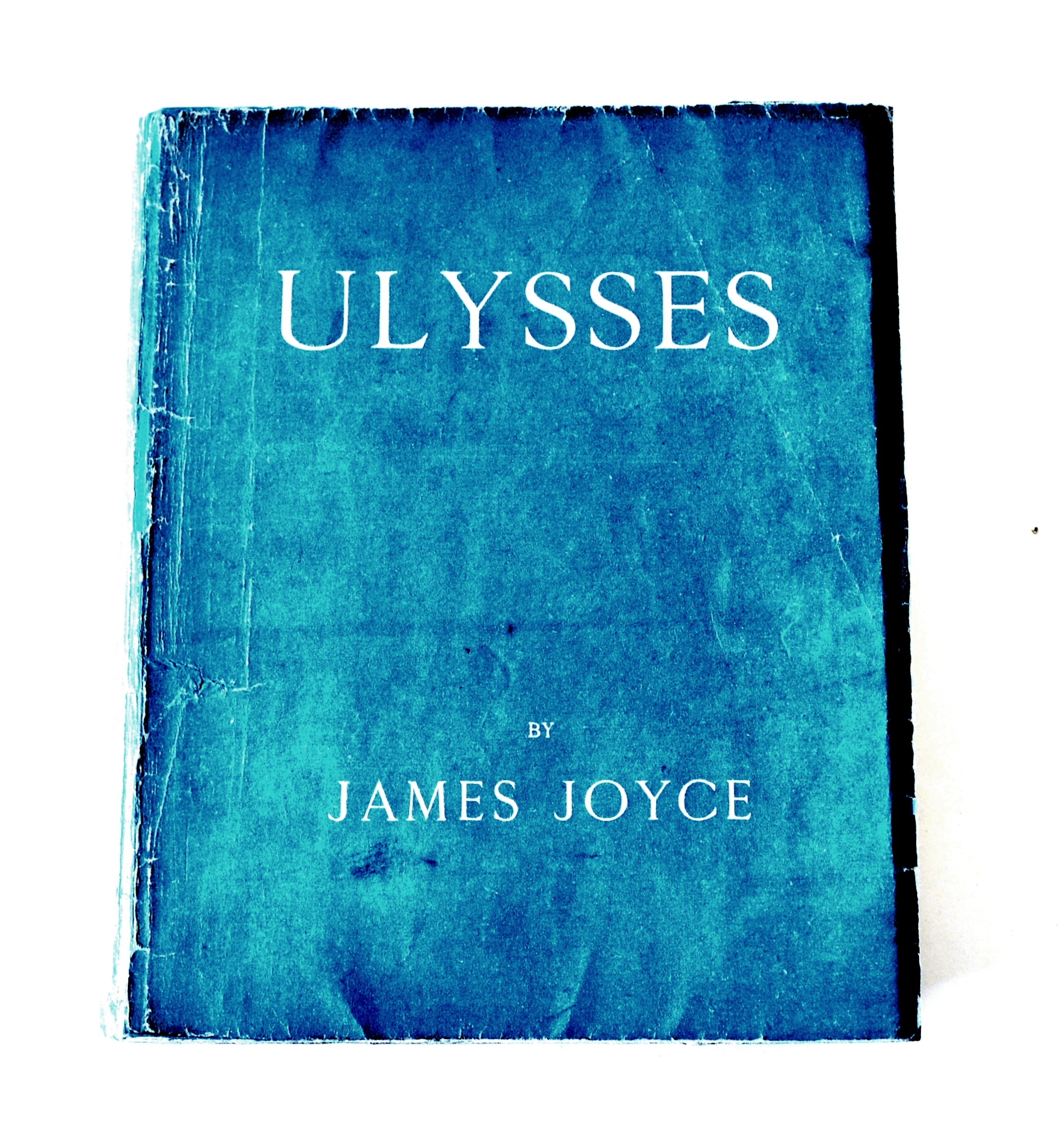
First English Edition of Ulysses, 1922

Ulysses Cover

First edition copy of James Joyce’s seminal modernist novel 

The history of Ulysses in print is almost as labyrinthine as the story itself. The Egoist Press edition of Joyce’s great masterpiece has been called the second printing of the first edition, which was published by Shakespeare and Company earlier in the same year. This is the first English edition. When the Shakespeare and Co. first edition sold out within a few months, the Egoist Press purchased the original printing plates from Sylvia Beach, the initial publisher. Printed in Dijon by the printers who had created the plates, the title page makes the following curious claim: ‘Published by the Egoist Press, London, by John Rodker, Paris.’ A private edition – like the Shakespeare and Co. edition – it was limited to 2,000 copies on handmade paper. Some 500 of those copies were confiscated by New York Postal authorities on the grounds of obscenity. This volume is number 1936.

Joyce famously declared that if Dublin was ever destroyed it could be reconstructed from the pages of his great novel Ulysses. The Dictionary of Irish Biography tells us that Joyce gave “infinitely subtle attention to the subjectivity of an insignificant Dubliner called Bloom” and by doing so “created one of the greatest figures of twentieth-century fiction, and the novel has been permanently altered by what he did.”

Some critics were not convinced that the book provided any real insight into the city of Dublin. Bernard Benstock asserted that Joyce’s novel was “no more about Dublin than Moby Dick is about a whale.” Knowing too much about Dublin “might indeed be dangerous in attempting a balanced reading of Ulysses.” However, as Ian Gunn and Clive Hart show in their book, James Joyce’s Dublin, some familiarity of Dublin life (for example, the tramways) is essential to understanding certain episodes in the novel: “had Joyce tried to do no more than represent his native city so completely that it could have been reconstructed from the pages of Ulysses, the novel would have been a sterile undertaking.” Instead Joyce gave us “a verbal equivalent of matter, an imaginary space in which to wander”.

Permanent Collection

John McCormack, 1904

John McCormack was a famous Irish tenor

This is a signed photo of the great Irish tenor Count John McCormack, who could sing 64 notes on a single breath (in Mozart’s Don Giovanni). He performed Panis Angelicus at the 1932 Eucharistic Congress, which was held in Dublin.

In 1904 McCormack reputedly gave James Joyce singing lessons before Joyce entered the Feis Ceoil tenor competition, winning a very respectable bronze medal. That same year Joyce met Nora Barnacle, his future wife.

Listen to John McCormack singing ‘The Irish Emigrant’:

Queen Victoria’s Arrival, 1900

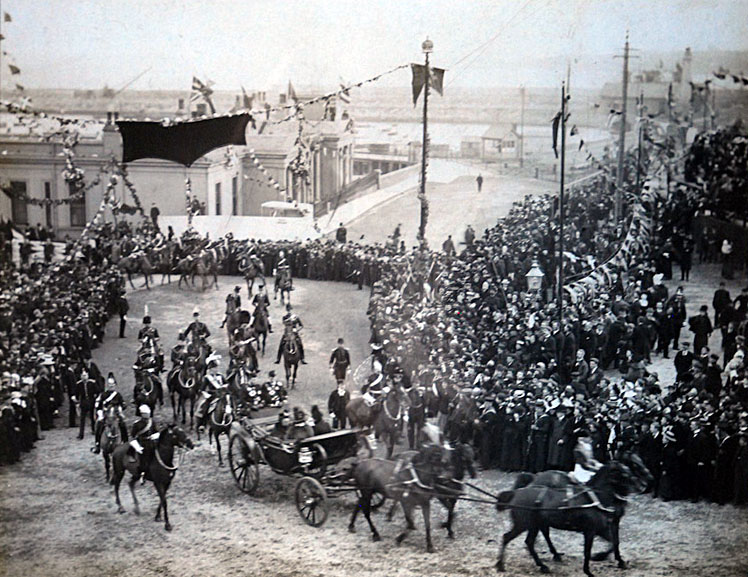
Arrival of Queen VictoriaQueen Victoria visited Dublin in 1900

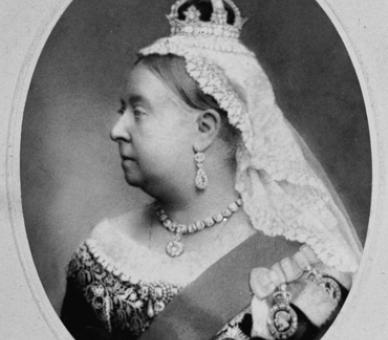
In the above image, Queen Victoria (later called the ‘Famine Queen) in what was then known as Kingstown and is now called Dun Laoghaire. You can see Dun Laoghaire pier in the background here, the aging Queen herself, and her loyal subjects lining the streets.

Queen VIctoria

Queen Victoria

In the Freeman’s Journal the following day we learn that a mock castle was erected in the Queen’s honour at Leeson Street Bridge, just so the Queen could have the experience of going through her castle gates to her city. This led to one of the most celebrated typographical errors of all time, when the paper is said to have reported, ‘there was much delight when the Queen’s party pissed over the bridge.’

Permanent Collection

Watch footage of the arrival:

.

The Little Museum Collection is growing every day. To view the artefacts in our archive you can browse the slides on the home page and search by decade or name. For more information about the Little Museum of Dublin, please click here.