Dublin Millennium Milk Bottle, 1988

Millennium Milk Bottle

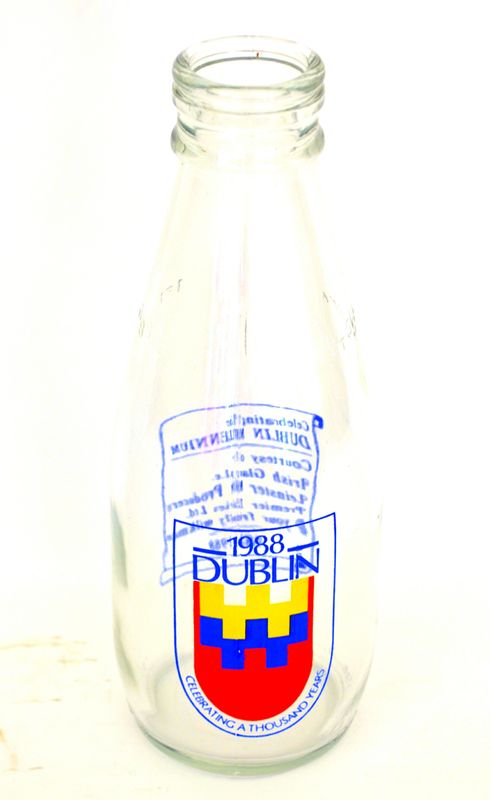
Dublin Corporation decided to celebrate Dublin’s millennium in 1988

This bottle is an iconic souvenir of the millennium. You’ll find one of these bottles in a Dubliner’s attic.

Despite initial skepticism – the date chosen, 988 AD, was arbitrary – the millennium was eventually embraced by the people of Dublin.

With thanks to Maureen O’Rafferty
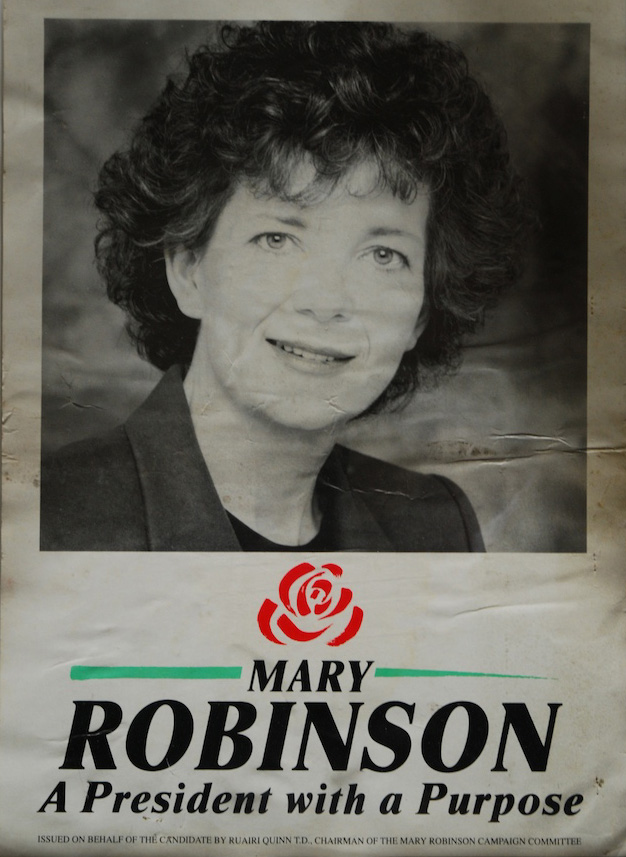
Mary Robinson Election Poster, 1990

Mary Robinson election poster

Mary Robinson was Ireland’s first female President, elected in 1990

An independent candidate with the backing of Labour and the Workers’ Party, Robinson was also the first president elected without the support of Fianna Fáil.

Robinson began her career as a senator, fighting to liberalise Ireland in the 1970s – access to contraception was one of her early causes, as well as abolishing a legal requirement that women in the civil service leave their jobs if they married. She was a legal advisor to the Campaign for Homosexual Law Reform, which eventually succeeded in overturning Ireland’s ban on homosexuality in 1992. As President, Mary Robinson revitalised the office, before becoming United Nations High Commissioner on Human Rights.

Permanent Collection

U2 & Hot Press, 1980

Hot Press

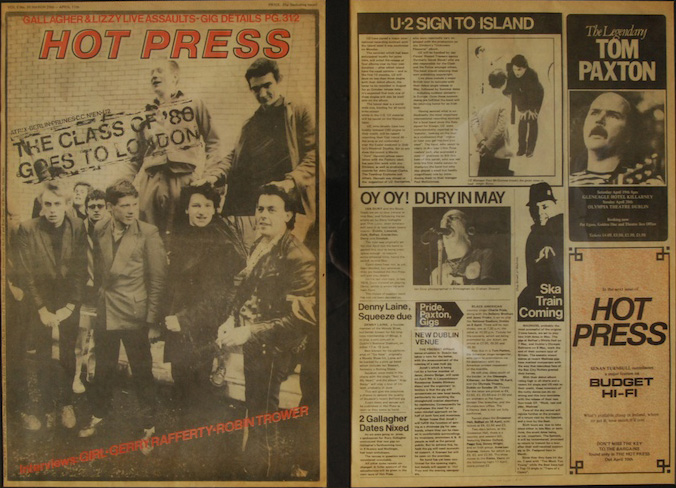
U2 are the biggest music act to emerge from Dublin

“By 1980,” recalls John Stephenson, “a young advertising executive called Paul McGuinness had spent the last of his money on a new Dublin band he’d been managing since 1978. McGuinness had persuaded Chris Blackwell of Island Records that U2 were worth considering, but the album deal was far from done.”

A showcase in London might do the trick. That’s where Stephenson came in – his Sense of Ireland Festival provided a platform for U2, the Virgin Prunes, Berlin, the Radiators from Space and Paul Cleary. Paul McGuinness persuaded Blackwell to bring the entire Island staff to the Acklam Hall, where U2 were playing as part of the festival. The band signed their first record deal a few days later. Hot Press is Ireland’s music magazine, founded in 1977 and edited to this day by Niall Stokes. The publication championed U2 and is still an important platform for emerging Irish music.

With thanks to John Stephenson

Watch a video about U2 and Hot Press:

Carmencita Hederman in Enniskillen, 1987

Carmencita Hederman, 1987

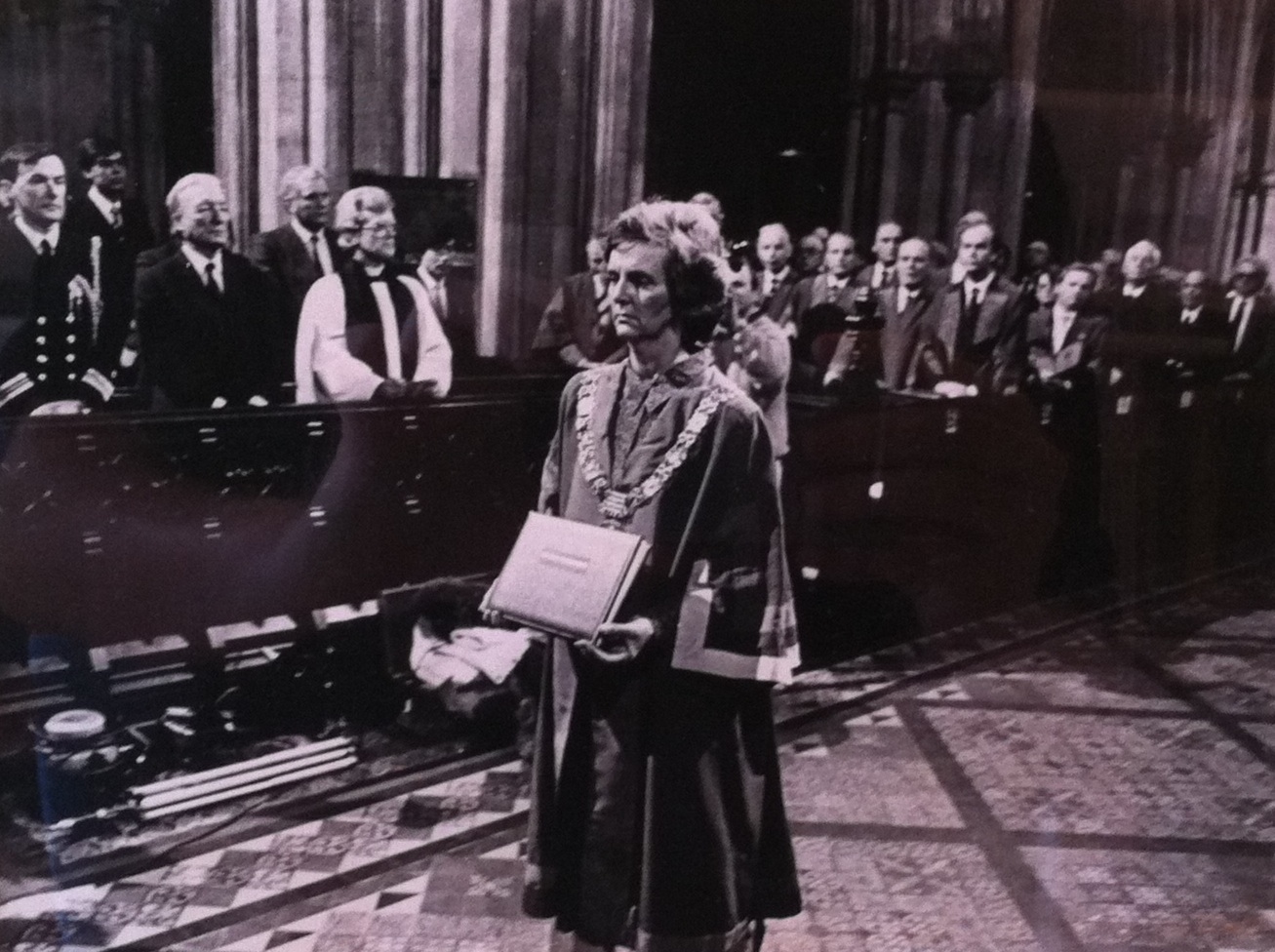
In November 1987 eleven people were killed when an IRA bomb exploded during a Remembrance Day Service in Enniskillen

Carmencita Hederman, who was Lord Mayor in 1987, remembers: “When a Book of Condolences was opened in the Mansion House, we kept having to run back down to Eason’s to buy new books because so many people turned up. At a memorial service in Enniskillen, I presented the book on behalf of the people of Dublin.” This photograph was taken during that service – note the presence of one Charles J Haughey.

With thanks to Carmencita Hederman

The Contraceptive Train by Eddie Kelly, 1971

Feminists

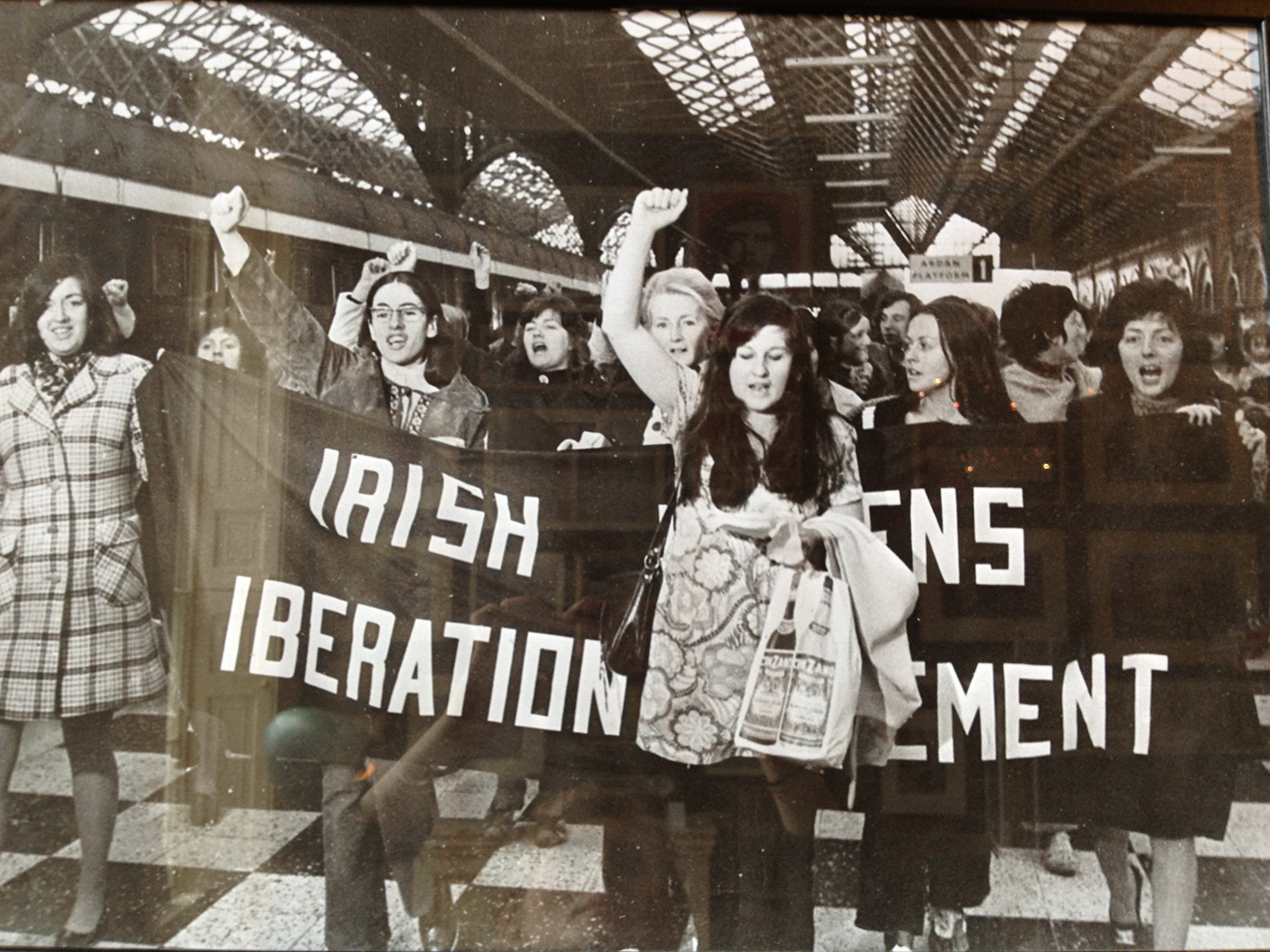
Liberal Ireland found its voice eventually

In 1971 the Women’s Liberation Movement went on a historic mission to Belfast to buy contraceptives. Here we see them arriving back with condoms and spermicidal jelly. (A prescription was required in order to obtain the pill in Northern Ireland.)

St. Stephen’s Green by Bill Doyle, 1971

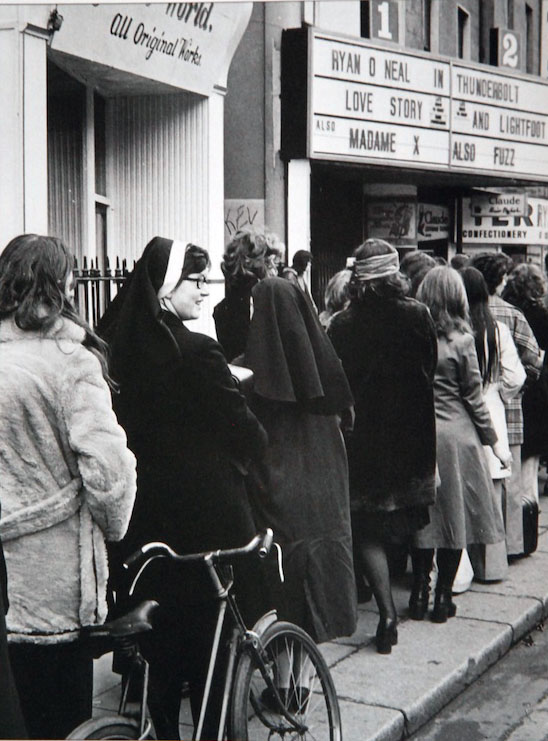
Nun at cinema

Dublin once had a vast number of cinemas including the Adelphi, the Savoy and the Green cinema

A queue for Love Story at the St Stephen’s Green Picture House (known as the Green) in 1971. Many nuns were not allowed to go to the theatre, but because films were censored, they were allowed to go to the cinema.

The Green opened in 1935, one of the first to deviate from the lavish style of early cinemas, offering a more relaxed experience with less overbearing décor. The cinema survived until 1987.

With thanks to Leslie Doyle for Bill Doyle and Lilliput Press

John F Kennedy Lectern, 1963

Kennedy's Lectern

The lectern from which President Kennedy adressed the Dail and the Seanad

On June 28, 1963, President John F Kennedy addressed both houses of the Oireachtas. It was a historic visit, not least because Kennedy, a young, dynamic Irish-American, had long made much of his Irish roots. Speaking at this lectern, Kennedy described his heritage, made an attack on literary censorship and noted – to the delight of the assembled politicians – that Leinster House “does not inspire the brightest ideas.”

The ‘lectern’ is actually a music stand that was owned by John Brennock, who bought it in an antique shop on Fishamble Street. During one of many meetings to prepare for President Kennedy’s visit, it was realised that the Dáil chamber did not have a lectern that could be used for a speech – TDs address the Dáil from where they are seated. Mr Brennock offered to lend his music stand to the Oireachtas. By the time the stand was returned – strapped to the top of a car – Kennedy had already been shot.

With thanks to Mark Brennock

ESB Fitzwilliam Street, 1967

Merrion square ESB

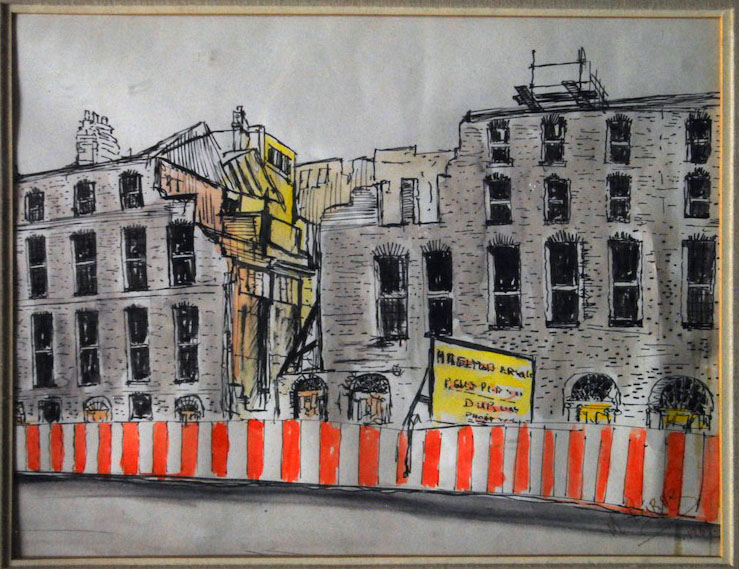
Dublin’s Georgian architecture is one of it’s most instantly recognisable features

In the 1960s the Financial Times noted, “the only reason why Dublin remained for so long the beautiful eighteenth-century city the English built is that the Irish were too poor to pull it down. Unfortunately, that is no longer the case.”

Fitzwilliam Street was once the longest uninterrupted stretch of Georgian housing in the world. This painting shows old houses on the street after they were torn down to make way for the ESB headquarters. Michael Byrne’s painting of ‘Derelict Dublin’ shows the destruction of Fitzwilliam Street in 1967.

Permanent Collection

Wanderly Wagon, 1967

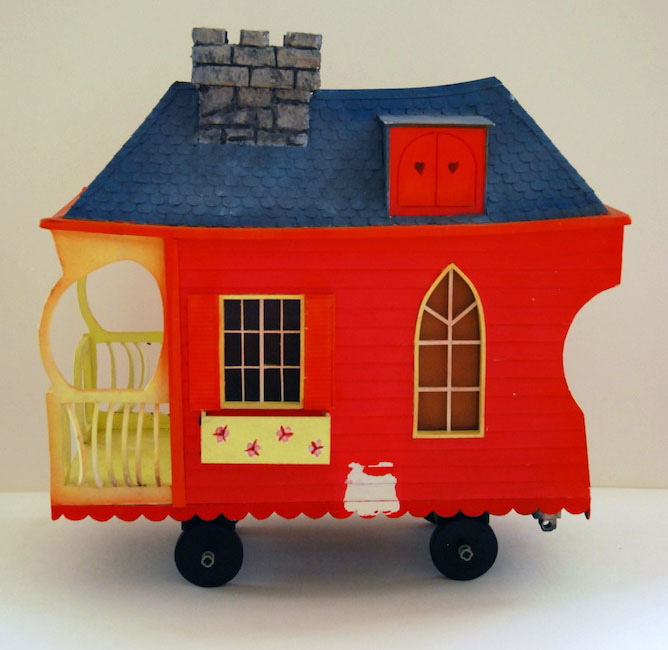
Wanderly Wagon

‘Wanderly Wagon’ was a beloved part of many an Irish childhood through the years

This model of the Wanderly Wagon was used for the flying scenes in the RTE children’s programme. Wanderly Wagon ran from 1967 until 1982.

The central role of O’Brien was played by the legendary puppeteer Eugene Lambert, who travelled the country in his flying wagon. O’Brien was joined by characters such as the grumpy Fortycoats, the lovable Godmother (played by Nora O’Mahoney) a flying dog called Judge, and old Mr Crow, a rather sardonic and unlikable bird. Strange but true: Neil Jordan once wrote an episode of Wanderly Wagon.

With thanks to RTE

Watch a video about the Wanderly Wagon model:

Archbishop McQuaid appointed, 1940

Archbishop McQuaid is to lead the conservative Irish church for many years

John Charles McQuaid is appointed Archbishop of Dublin. With the power of the Church behind him, the conservative cleric wields huge influence for the next 30 years.

There was no aspect of life in Ireland that escaped his eye – he even lobbied to get the new film version of Ulysses banned. It does, however, have the dubious distinction of being the first film ever to use the F-word.