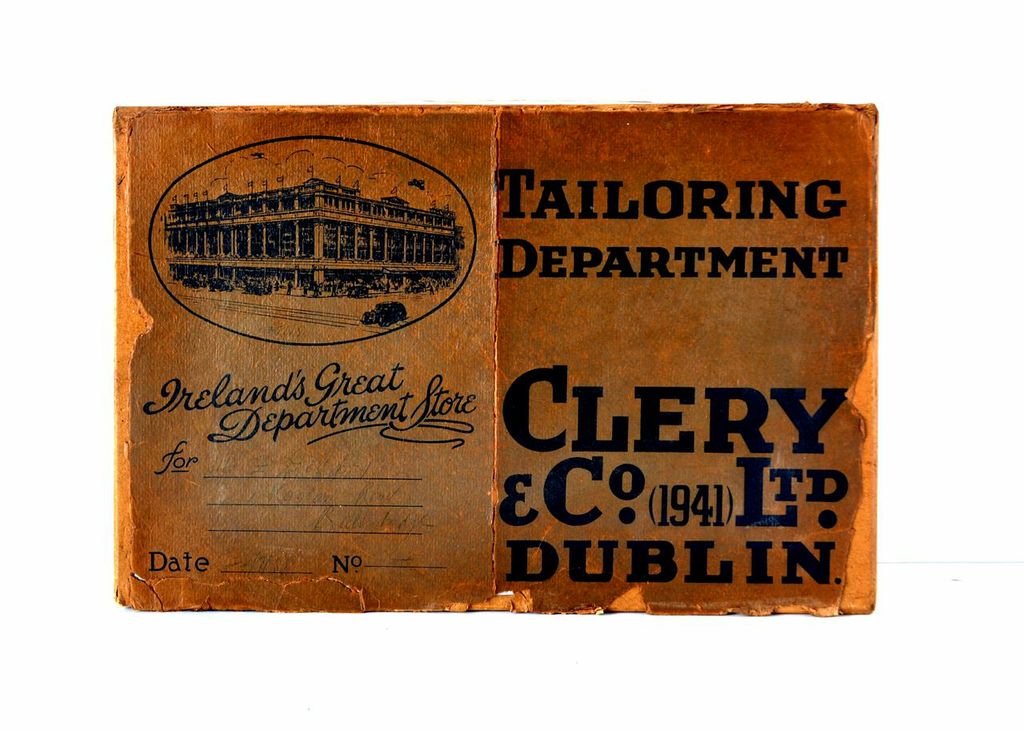
Clery’s Box, 1941

Clery 1941

Clery’s Department Store is an intstantly recognisable Dublin shop

A box from Clery’s tailoring department in 1941. Clery’s was founded as ‘The New or Palatial Mart’ in 1853, bought over and renamed by M. J. Clery in 1883.

The current building – which is modelled on Selfridge’s of London – dates from 1922, the original having been destroyed during the Easter Rising. In 1943, this much-loved department store was taken over by the Guiney family, who also owned the nearby Guiney’s department store.

Permanent Collection

Portrait of Christy Brown, 1980

Christy Brown

Christy Brown was an author, painter and poet who suffered from cerebral palsy

Brown is most famous for his autobiograpy My Left Foot – his left leg was the only limb over which he had complete control, so he taught himself to write and paint with his left foot. Noel Pearson’s 1989 film of the same name, directed by Jim Sheridan and starring Daniel Day Lewis as Brown, is one of the most celebrated Irish movies of the last 30 years.

With thanks to Noel Pearson

Collection of call cards, 1990s

Callcards

Between the era of the payphone and the mobile phone, there was a brief interlude in which the “cardphone” prospered

Telephone companies were keen to promote the cards – because customers paid up front, and often didn’t use their full allocation of credit. (Although an urban myth about recharging the cards by leaving them in your freezer was widely circulated). Small, iconic and fairly durable, these callcards quickly became a collector’s item among schoolboys, philatelists and miscellaneous geeks – traded at market stalls.

Phone companies quickly realised they could capitalise on this by selling advertising space on the cards, creating even more collectables in the process. Most payphones in the city were converted to accept callcards. However, the rising ubiquity of mobile/cell phones soon ended the market for callcards.

With thanks to Abie Philbin Bowman & Keith Brunkard

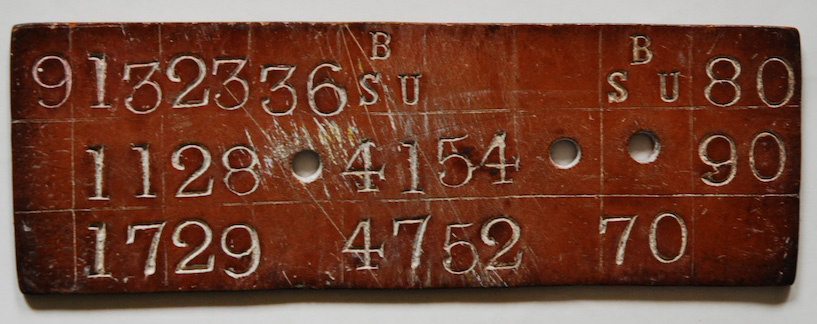
Butchers Social Union Bingo Card, 1930s

BSU bingo card

Bingo Cards were made out of leather so that they could be reused

In the 1930s the Butchers Social Union found themselves faced with a mystery. Their leather bingo cards kept going missing. One day someone noticed that bingo players were stealing the cards to patch holes in their shoes. So the Union decided to stamp several holes in the cards, thus foiling the thieves.

With thanks to Séamus Marken

Watch a video about Ireland in the 1930’s meant for an American audience:

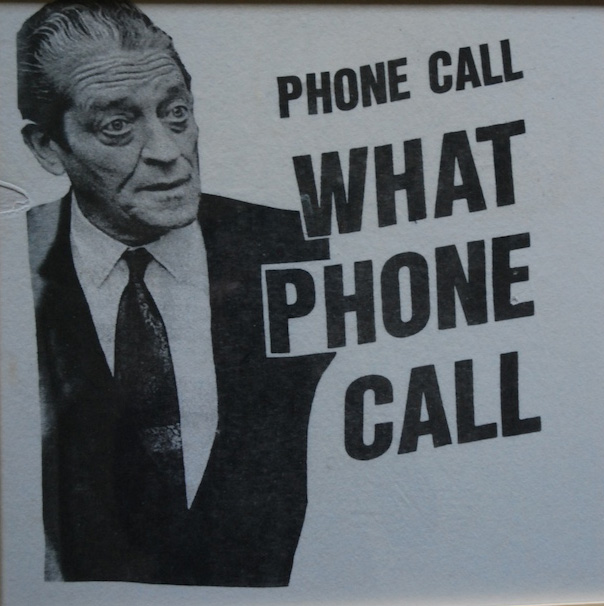
‘Phone Call, What Phone Call’, 1990

Brian Lenihan %22What phone call%22

This t-shirt mocks Brian Lenihan during the 1990 Presidential campaign

The aging statesman was caught spoofing in one of those classic Irish Presidential campaigns (long and bitter). With his credibility damaged, Lenihan lost the election to Mary Robinson.

With thanks to Frances Briody

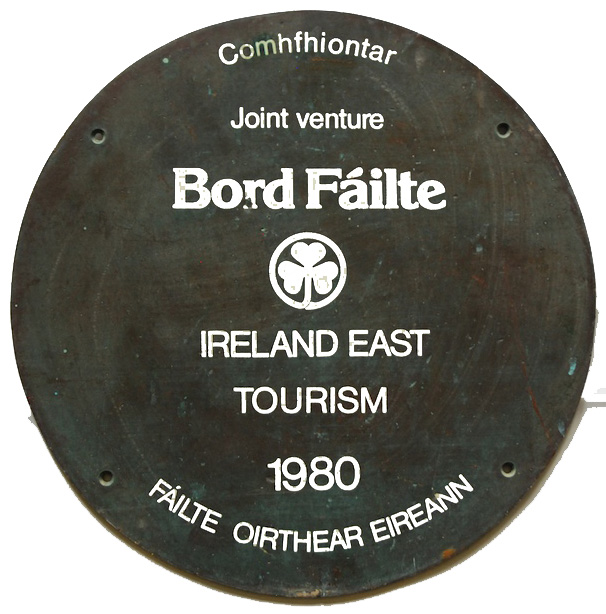
Bord Fáilte Sign, 1980

Bord Failte sign 1980

Sign for Bord Fáilte, Ireland’s tourist board

Bord Fáilte was Ireland’s tourism promotion organisation from 1955 until it was succeeded by Fáilte Ireland in 2003. In those days it put up signs at heritage sites, advertised Ireland abroad and produced events like the Rose of Tralee and the Dublin Theatre Festival.

Permanent Collection

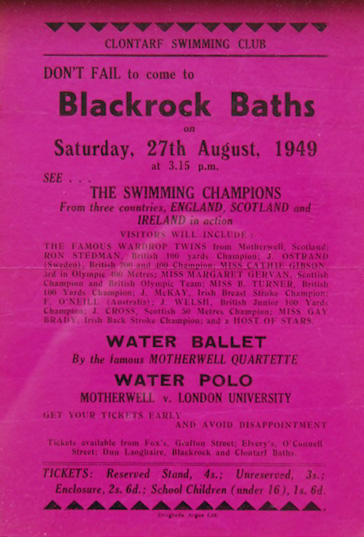
Flyer for Blackrock Baths, 1949

Blackrock baths flyer, 1949

The Blackrock Baths were hugely popular for much of the twentieth century

The Blackrock Baths was created following public outcry at access to the sea being cut off by the building of the Dublin-Kingstown railway line in 1834. Hugely popular, the baths often witnessed displays by Dublin’s great high-diving and springboard-diving champion, Eddie Heron.

During the 1980s the baths fell into disuse and were later dismantled and sold to a private firm.

Permanent Collection

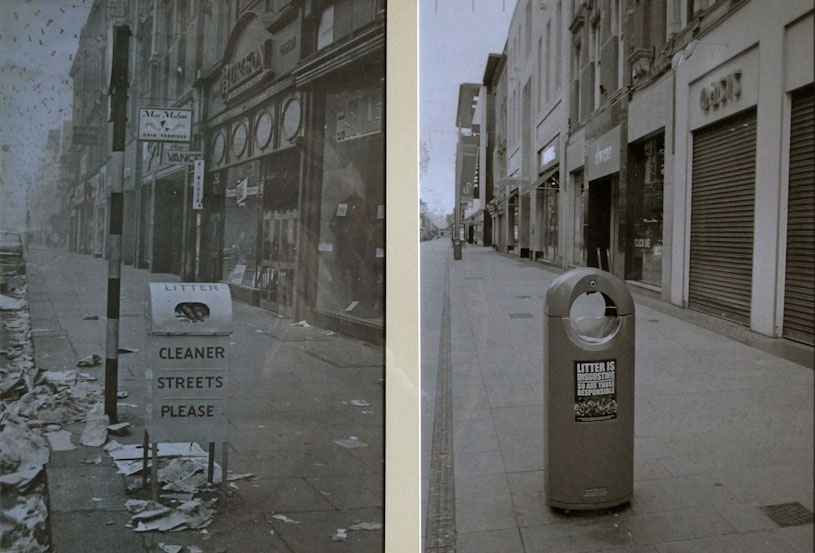
Henry Street and Litter Bin 1966 – 2009

Bin 60s and present

These pictures show how much (and how little) Dublin has changed in forty years

Pádraic McMahon, a photographer and former member of the Dublin rock band The Thrills, inherited a collection of photos of Dublin in the 1960s from an elderly neighbour, William Stafford (1915-2006).

McMahon recreated the photos as faithfully as possible, using the same exposure settings, in the same locations – even at the same time of day and in the same weather. Here on the left a Litter Bin in 1966 and on the right in 2009.

With thanks to William Stafford and Padraig McMahon

Watch an RTE documentary about Dublin showing scenes from different eras:

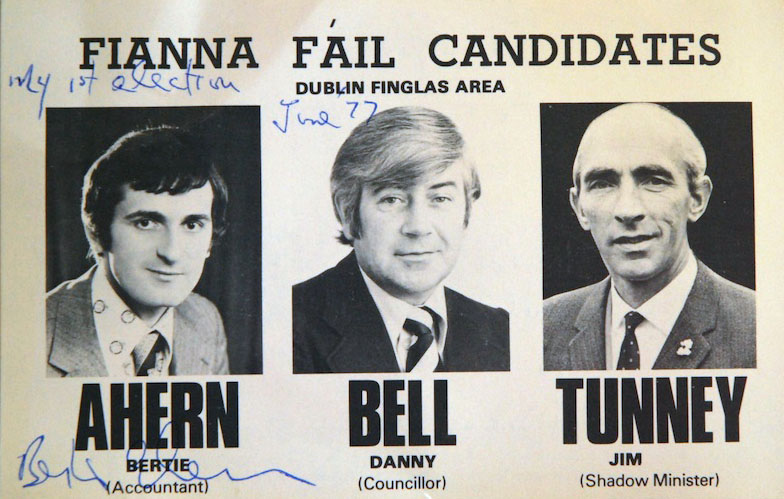
Bertie Ahern’s First Election Flyer, 1977

Bertie Ahern election leaflet

Bertie Ahern served as Taoiseach of Ireland from 1997 to 2008

Bertie Ahern was either an anorak-wearing man of the people or a political operator so smooth that nothing would stick to him – the Teflon Taoiseach. He resigned in 2008, giving his successor the ultimate hospital pass.

With thanks to Bertie Ahern

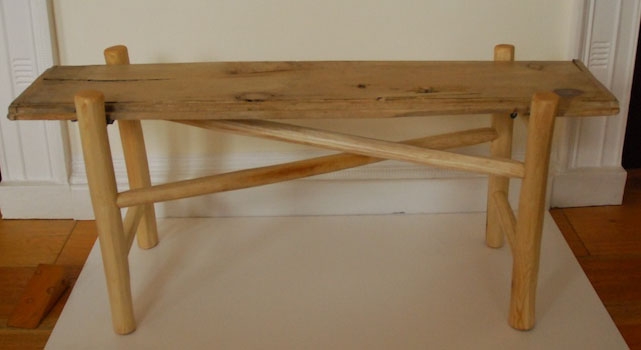
Shutter from Harcourt Terrace, 1916

Bench

A shutter with bullet holes

This stool was made with a shutter from 11 Harcourt Terrace. The shutter is marked by bullet holes from the 1916 Rising. In 2011 James Carroll hand-crafted the stool in his workshop in the Wicklow mountains, using cleft ash. Carroll uses materials often discarded or passed over by others, bringing the pieces to life with traditional Irish craftsmanship.

Permanent Collection